

What is a half-mortise box lock?
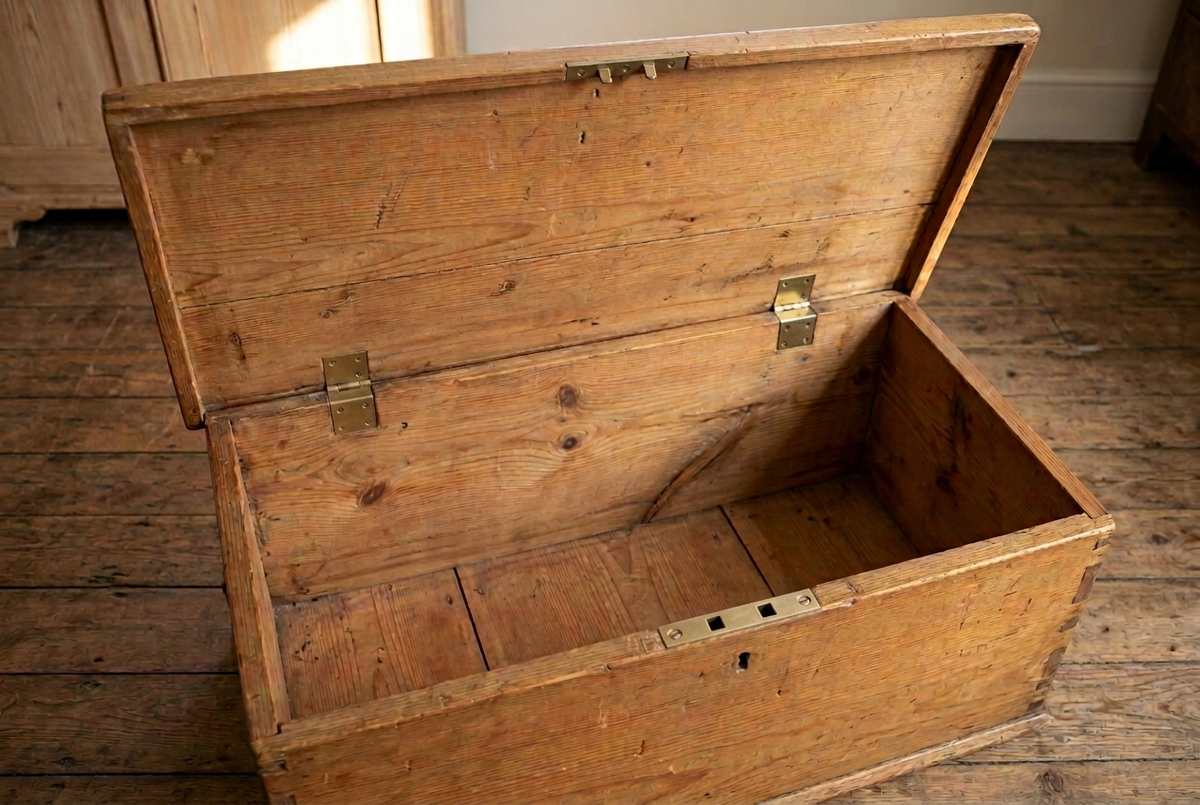
A half-mortise box lock secures the lid of a box or chest. It fits into a recess cut into the inside of the box’s front wall. A brass plate is visible inside, while only the keyhole shows on the outside.
A matching strike attaches to the underside of the lid, near its front edge. When the lid closes, the strike’s two fingers enter openings in the top of the lock. Turning the key secures the fingers inside the lock, holding the lid closed.
How do half-mortise locks work on boxes and lift-lid chests?
Half-mortise box locks fit into a recess on the inside of the box’s front wall. All that is seen from the chest interior is a brass plate. The lock is not seen on the exterior of the box, only the keyhole is visible .
A matching strike attaches on the underside of the lid, near its front edge. As the lid closes, its two fingers drop into openings in the lock’s top edge. Turning the key secures the fingers inside the lock, holding the lid closed.


How do I measure the backset for a half-mortise box lock?
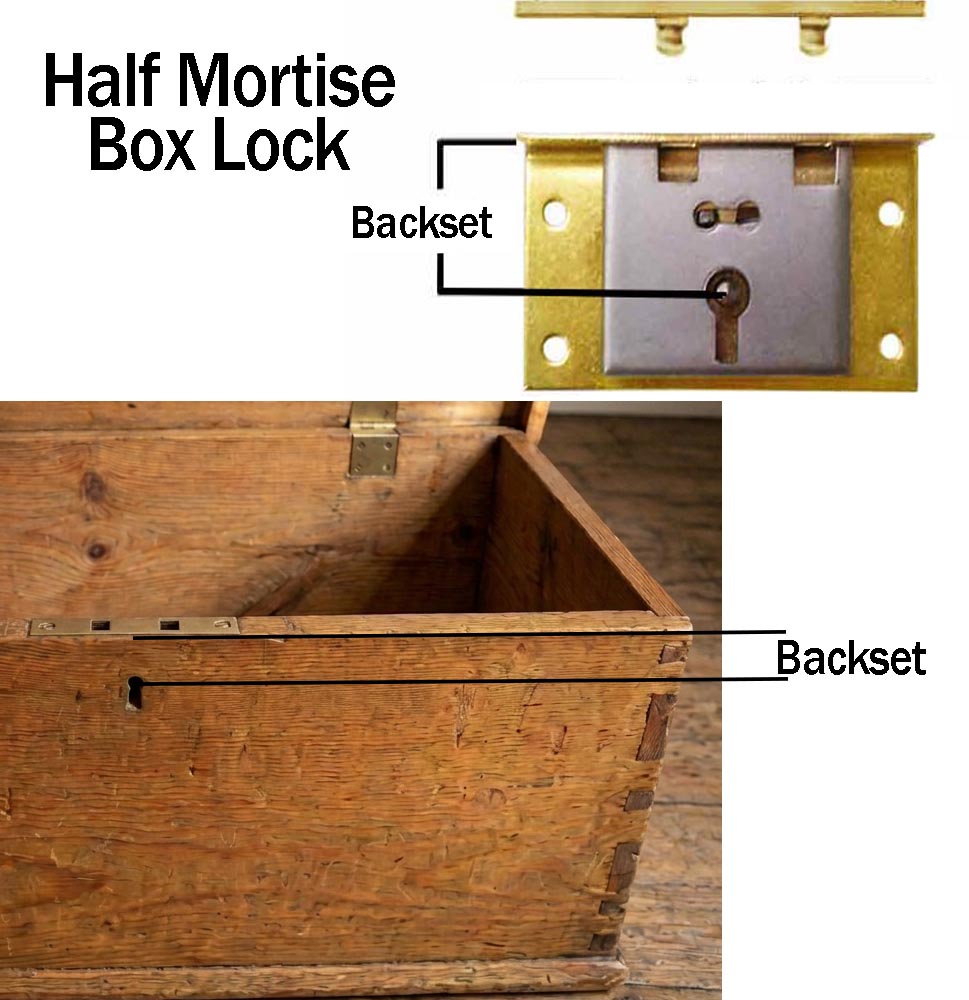
The backset is the distance from the lock’s top edge to the center of the key pin, as shown in the diagram.
- Replacing a lock: this measurement must match the existing keyhole position.
- Fitting a lock where no keyhole exists: the backset determines how far below the box’s top edge the keyhole will be positioned.
How do I measure if I have the original lock?
Measure from the lock’s top edge to the center of the key pin to determine the backset. Also measure the lock body and brass plate so you can compare them with the replacement.
An exact match for an old lock is rarely available. Even when the backset matches, the replacement’s body or plate may differ in size. Cabinet work may be needed to alter the existing recess and fit the replacement lock. Don’t assume it will drop straight into the old lock’s recess.
How do I measure if the original lock is missing?
Measure from the top edge of the box’s front wall down to the center of the round portion of the existing keyhole, where the key pin would sit. This gives you the required backset.
What else should I check before choosing a replacement box lock?
The selvedge depth equals the thickness of the lock. Compare this measurement with your wood thickness.
How do I fit a half-mortise box lock?
If a keyhole already exists, align the replacement lock with it before marking or altering the recess. If there is no keyhole, establish the lock’s position first, then mark the keyhole to match.
The key pin may be off-center in the lock body, so check its position before marking or cutting.
Mark the outlines of the brass plate, selvedge and lock body. Carefully cut the recesses so the plate sits flush with the interior wood and the selvedge sits flush with the top edge. Leave enough sound wood for the mounting screws.
How do I match the lock to the keyhole?
If the box already has a keyhole, its position is fixed. Choose a lock with a backset that places the key pin in line with the existing keyhole.
If there is no keyhole, use the lock to determine its position. Measure the key pin’s location from the top and side of the lock plate, then transfer those measurements to the wood. Drill a small pilot hole and check alignment with the lock before enlarging it for the key barrel.
How do I fit the strike beneath the lid?
Position the strike on the underside of the lid so its fingers align with the openings in the lock’s top edge. Mark its position and cut any recesses needed for the plate and fingers.
Check alignment carefully before securing the strike. Test the lock with the lid open first, then gently lower the lid to check that the fingers enter without forcing them.
